
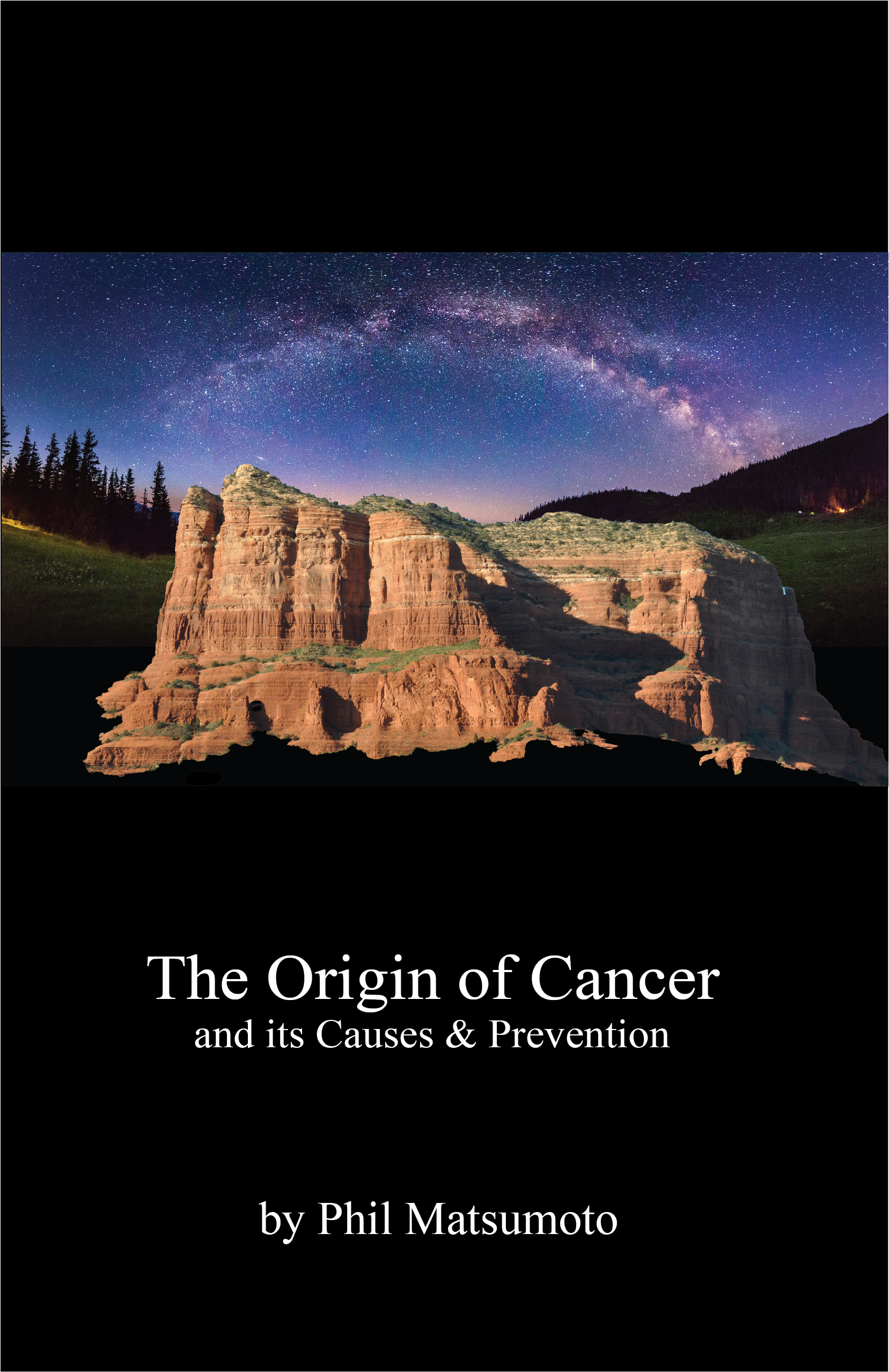
The Origin of Cancer book is finally finished and is available for purchase from Amazon.com and Barnes and Noble and Apple Books. Available as an Amazon Kindle eBook, too. Buy it now and read about our very plausible theory on where cancer comes from, a theory backed by over 40 years of research. Thank you. PM
Phil's second book, which explains how you can become a bestselling author with Amazon KDP (Kindle Direct Publishing)

Favorite Anti-Cancer Recipes
Reference Websites*
Search Wikipedia:
List of Medical Roots/Prefixes...
* External links
Home Page Sources*
Cancer Prevention
DIET
1. Everything you eat should be as fresh as possible. Spoiled, moldy, or rancid foods, especially if they contain rancid or oxidized fats or oils, are high in carcinogens, such as aflatoxin. Consume perishables before they go bad, or put them on the compost pile if they are past their prime unless they are meat, bones, or foods high in grease or oil. Reduce your consumption of preserved foods unless they are fermented. (See #6 below.) Choose fresh, raw foods over canned or even frozen foods. Just picked is even better. We recommend growing your own vegetables and fruits, if possible.
2. Reduce your consumption of deep-fat fried foods, especially French fries, which are often made in old, rancid oil or hydrogenated oil, which is a totally artificial form of fat. Reduce your consumption of beef and pork, which are high in fat, much of which is polyunsaturated and becomes oxidized more quickly. Eat more fresh fish from unpolluted waters, lamb, fowl, and wild game.
3. Increase your consumption of foods high in vitamin C: oranges, limes, lemons, green peppers, hot peppers, ripe tomatoes, etc. Use natural vitamin C powder mixed into freshly-squeezed orange juice if you want to increase your vitamin C intake. Most people need much more vitamin C than the RDA, but you don't want to drink too much orange juice because of its high sugar content. Also, add some juice from fresh lemons or limes to the orange juice to provide a more complete intake of vitamin C and the synergistically-acting bioflavonoids (formerly called vitamin P). Vitamin C is vital in keeping the immune system functioning properly.
4. Try to reduce your consumption of fat and sugar. Avoid margarine completely. Some margarines still contain polyunsaturated, hydrogenated fat and often have artificial coloring and flavoring. Butter or olive oil, used sparingly, is better. Reduce your intake of processed oils, mayonnaise, salad dressings, etc.
5. Reduce your consumption of salt, except possibly in miso soup if you aren't allergic to soy products, because some cancerous cells are high in sodium and low in potassium, which is the exact opposite of normal cells. Vegetables, fruits, and cereals are high in potassium. Eat organic produce that is unsprayed with pesticides so that you don't have to wash them very much. Potassium is water soluble and is easily lost by soaking or washing the fruits and vegetables in water. Avoid water softeners that add sodium and remove vital minerals such as calcium and magnesium in the water. Drink hard water that contains these minerals; use bottled spring water if local water is soft or polluted.
Cancer/Medical Websites*
Cancer.gov—National Cancer Institute
Cancer.net—American Society of Clinical Oncology
Cancer.org—American Cancer Society
Medical News Today—Cancer/ Oncology News
Universities Mentioned *
Kobe University Graduate School of Medicine
Other Articles of Interest*
3 Ways that Laughter Can Give You a Healthier Heart
An Ancient Cure for Alzheimer's
[2] [3]
[4] [Alzheimer's - TED TALKS]
Atkins vs. Keto Diet Different Diets
Bacteria Video# Viruses Video#
Bacteria May Live (Harmlessly) in Your Brain
Beginner's Guide To Getting Better Sleep
Best Look Yet at How Our Brain's Sewage System Flushes Out Waste
Chromosomes [Video 1#] [Video 2#]
CRISPR-Cas9 [Video 1] [Video 2#]
Endosymbiosis [2] [Video 1#] [Video 2#] [Video 3]
Gut Bacteria Spotted Eating Brain Chemicals for the First Time [2] [3] | [Agonist][Butyrate]
Heart Disease and the Microbiome (Gut Bacteria) [2]
Human Health is in the Hands of Bacteria
Immune System Doesn't Trust Mitochondria in Parkinson's disease
"In 1939, men were a whopping eating 3500 calories a day and only weighed 150 lbs.."
Kill Switches Keeps GMOs on a Short Leash
The Little-Known Health Benefits of Japanese Miso Soup
Methanosarcina (Methane Generators) [Extinction Video#] [Archaebacteria Video#]
Methylotrophs (Methane Eaters) [2]
Mitochondria Mutation Mystery Solved: Random Sorting Helps Get Rid of Duds
Mitochondrion [Cellular Organelles Video#]
New Research Shows Humans Possess Surprising Nutritional Intelligence
New Window on Mitochondrial Division [2] [Methanogens]
Personalized microbiome-driven effects of non-nutritive sweeteners on human glucose tolerance
Prescribing Healthy Food in Medicare/Medicaid is Cost Effectve, Could Improve Health
Research links red meat intake, gut microbiome, and cardiovascular disease in older adults
A Room with a View: Window Office Improves Sleep
Top Ten Highest Nutrient Foods
Type 1 Diabetes Linked to Gut Inflammation, Bacteria Changes [2] [3]
UCSD Study Finds Root Cause of Type 2 Diabetes [2] [3] [4]
Want to Live to Be 100? These Italian Villagers May Hold the Secret to a Long Life [2]
What is the Best Diet for Humans - TED TALKS
With a Microbe-Produced Toxin, Bacteria Prove Old Dogs Can Learn New Tricks
* = External links
# = Outstanding YouTube Videos by Paul Andersen, Bozeman Science
Articles About Cancer*
General Cancer
Ancient Viruses That Function in Early Human Development May Play Role in CancerBacterial Injections into Tumors Show Early Promise for Treating Cancer
Cancer rates are climbing among young people. It’s not clear why. 2
Dogs Excel on Smell Test To Find Cancer [Alkane] [Benzene]
Exercise Lowers Risk of Some Cancers by 20% or More
High Doses of Vitamin C to Improve Cancer Treatment Passes Human Safety Trial
History of Dogs Traced Through Contagious Canine Cancer
Microbial DNA In Patient Blood May Be Tell-Tale Sign of Cancer
Novel Cancer Therapy Targeting Microbiome [Immune System Video#]
Stress Creates A 4-Fold Increase In Spread Of Cancer: Study New
Study Reveals How Ionising Radiation Damages DNA and Causes Cancer [2]
Swarms of Magnetic Bacteria Could Be Used to Deliver Drugs to Tumors
Synopsis of our Theory on the Origin of Cancer Important
Toxic Formaldehyde is Produced Inside Our Cells
Transmissible Cancer is a Time Capsule from the Earliest Dogs [2]
Video – T Cell Attacking & Killing a Cancer Cell
Bone Cancer
Repeating DNA Sequences Play a Role in Bone Cancers
Brain Cancer
Brain Cancers Reveal Novel Genetic Disruption in DNA [2]
Misregulated Protein Breakdown Promotes Leukemias and Brain Cancer
Breast Cancer
Can Tech Meant to Explore Space Answer Vital Questions About Breast Cancer? [2]
Diet Affects the Breast Microbiome in Mammals
Melatonin and Breast Cancer [Free Radicals] [2]
Colon Cancer
Bacteria Play Critical Role in Driving Colon Cancers
Nuclear Transfer of Mitochondrial DNA in Colon & Rectal Cancer
Spinach Reduces Colon Cancer Risk; Study Explorers How
Colon Cancer Linked to Mouth Bacteria New
Leukemia
Wasp Study Finds Sting in the Tail for Cancer Cells
Lung Cancer
Black cardamom (spice) bioactives effective against lung cancer cells
Pancreatic Cancer
Prostate Cancer
Getting Creative To Cut Methane From Cows
Oregano Destroys Prostate Cancer Cells
Skin Cancer
Dirt-dwelling Microbe Produces Potential Anti-Melanoma Weapon
Skin Bacteria Could Protect Against Disease
Stomach Cancer
Are Stem Cells the Link Between Bacteria and Cancer? [2]
Origin of Humans Articles*
Discoverer of Lucy Skeleton Hopes to Find What Made Us Human
DNA from Ancient Latrines Reveal What People Ate Centuries Ago [2] [3]
Domesticated Plants and Animals [2]
Doubling Up on Junk DNA Helps Make Us Human
Earliest Human Cancer Found in 1.7 Million Year Old Bone
It's Official: Timeline for Human Migration Gets a Rewrite [2]
Our Ancestors ate a Paleo Diet. It had Carbs
What Gorilla Poop Reveals About Our Own Lousy Diets [2] [3]
When Farmers and Foragers First Met
Health/Medical Apps*
First Aid iOS [Android version]
Outdoor Survival Guide iOS [Android version]
Sleep Cycle iOS [Android version]
Medical Journals
Disclaimer: Phil Matsumoto is not a medical care provider. The information presented here is designed to be educational. Under no circumstances should it replace the expert care and advice of a qualified physician. Rapid advances in medicine and science may cause information on this website to become obsolete, invalid or subject to debate. Accuracy cannot be guaranteed.
© Copyright 2024. Phil Matsumoto. All rights reserved.
Last updated on 4/16/24
Our next step
Since 2004
Try a different browser if you cannot see the hidden comments that pop up when you move your mouse pointer or tap with your finger on certain links above. Test here.